Best Weight Benches 2026
A quality weight bench is the foundation of any effective home gym. We compared flat, adjustable FID and folding benches on rated capacity (and whether it includes bodyweight), pad width and length, incline adjustment range and frame construction.
What to Look for in a Weight Bench
Stability is non-negotiable. A bench that wobbles under a heavy bench press is a safety risk. Look for benches with a wide base footprint, welded (not bolted) frame construction and a minimum weight capacity of 270 kg (600 lbs) for serious lifting. Test the bench loaded to your working weight before buying if possible.
Pad dimensions affect shoulder blade positioning during pressing. A pad that is too narrow causes the shoulder blades to hang off the edge, reducing stability and compromising the pressing pattern. The pad should be at least 27–28 cm wide for most users. Pad thickness should be 5–8 cm — soft enough for comfort, firm enough that it does not compress excessively under bodyweight.
Adjustable vs. flat: A flat bench is more stable, simpler and better suited to heavy powerlifting-style pressing. An adjustable FID (flat/incline/decline) bench enables incline press variations, which are important for complete chest development. If budget allows, an adjustable bench with a rigid lockout mechanism is the versatile choice.
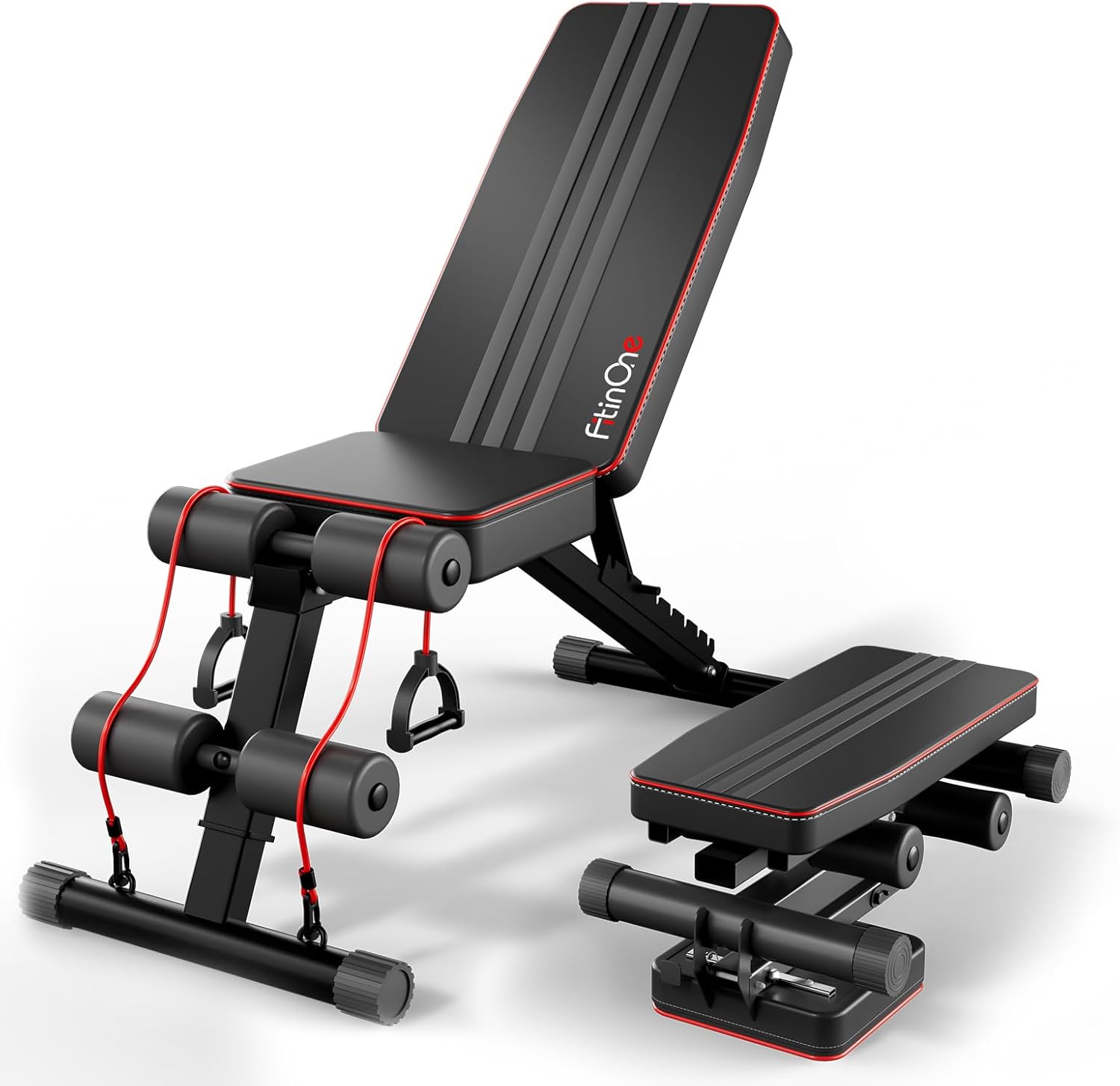
The Flybird takes the top slot on the published numbers, and it takes it clearly: 340 kg rated against the Rep's 318, eight back positions to six, four seat positions, and it declines where the Rep does not. It also folds flat, which is what most home setups actually need. One caveat the spec sheet hides — the frame weighs 12 kg against the Rep's 32 kg, and a light bench moves more under a heavy press. If you train close to your limit, read the Rep's entry below before you decide.
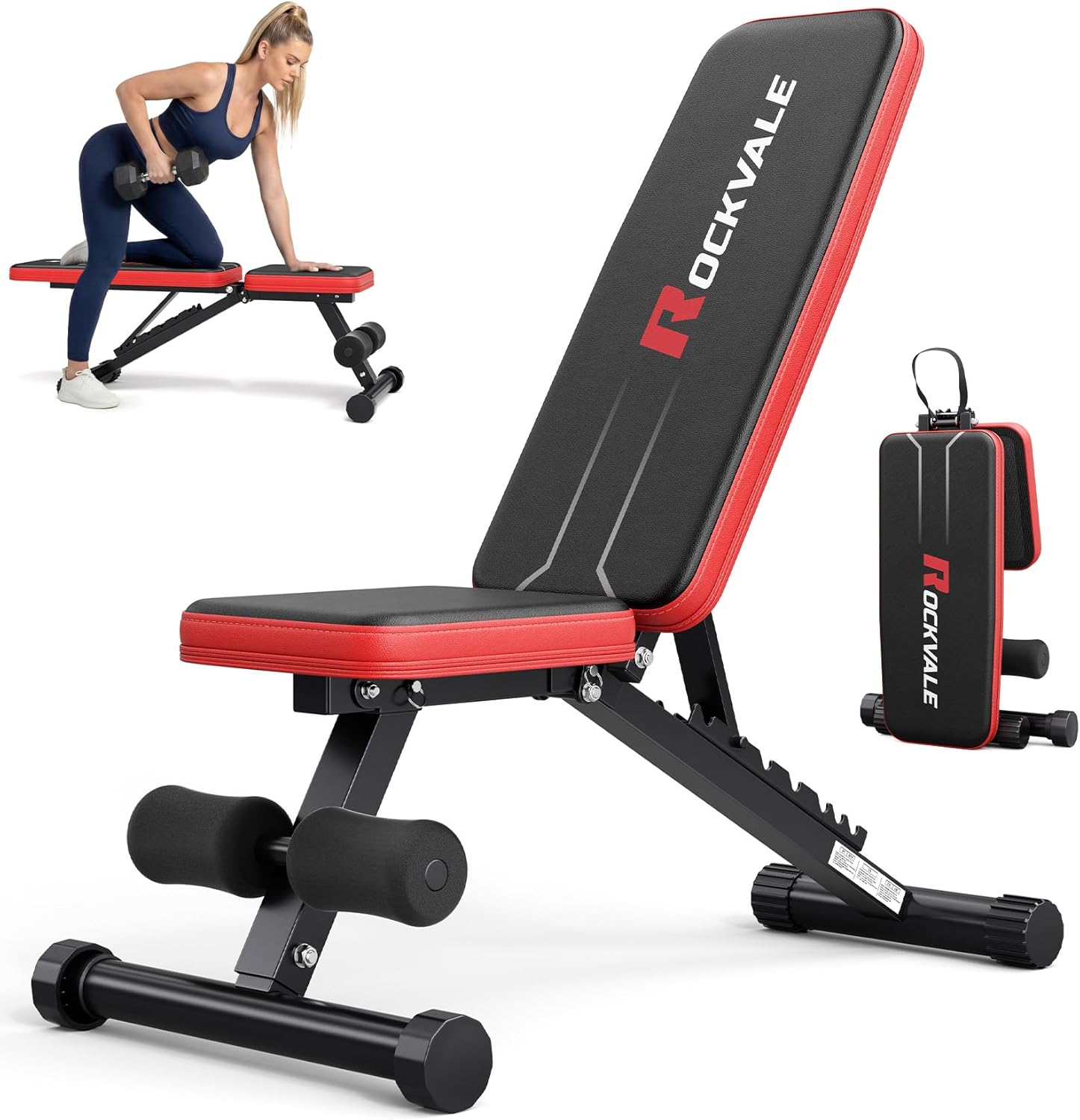
The Rep loses the top slot on paper and wins most of it back in the hand. At 32 kg it carries nearly three times the frame weight of the Flybird above it, and that mass is what keeps a bench still under a heavy top set. The ladder mechanism adjusts faster and holds better than the pin systems on cheaper competitors, and the 30 cm back pad sits at the top of the useful range for shoulder support. Two limits to know before buying: REP rates it to 318 kg, below several benches here, and it is flat-incline only — there is no decline position.
For pressing-focused training where stability matters more than incline adjustability, a simple flat utility bench is hard to beat. The CAP Barbell Deluxe is a long-running budget pick — a fixed steel frame with no moving parts to wobble or fail. It is the most affordable way to get a stable, dedicated flat pressing surface for a home gym.
Frequently Asked Questions
Do I need an adjustable bench or is a flat bench enough?
A flat bench is sufficient for standard bench press variations. If you want to include incline press (which develops the upper chest more effectively), an adjustable FID bench is necessary. For most home gym setups, an adjustable bench offers more versatility for the same price range.
How much weight capacity do I need in a bench?
A minimum of 270 kg (600 lbs) is the recommended floor for serious home gym use — this accounts for your bodyweight plus loaded barbell. Most home benches clear that easily: the Rep AB-3100 is rated to 318 kg and the Flybird WB3 to 340 kg. Treat the rating as a floor rather than a ranking, though — frame weight and base width decide how stable a bench feels long before you approach its rated limit.
What is the ideal bench pad width for bench press?
27–31 cm is the optimal range for most users. Narrower pads cause the shoulder blades to hang off the edges, destabilising the shoulder girdle. Wider pads restrict the wrist path for some lifters. The Rep AB-3100 sits at the top of that range at 30 cm, tapering to 23 cm at the shoulders.
The full home gym list
Every bench, rack, dumbbell and band we recommend — collected in one list on Amazon.
See the full list on Amazon →