Caffeine Benefits: The Evidence-Based Guide to Sports Performance, Dosage and Safety
Caffeine is one of the most researched performance aids in sport. This guide explains what it does, how much to use, when to take it, how it compares with coffee and pre-workouts, and when sleep or tolerance should change the plan.
What You'll Learn
Caffeine Dosage Table
| Goal | Recommended Dose | Timing |
|---|---|---|
| Beginners | 1.5-2 mg/kg | 45-60 min pre-workout |
| General Performance | 3-6 mg/kg | 60 min pre-workout |
| Strength Training | 3-6 mg/kg | 60 min pre-workout |
| Endurance Events | 3-6 mg/kg | 30-60 min pre-event |
| Evening Training | Lowest effective dose | Avoid close to bedtime |
For decades, athletes, coaches, and fitness enthusiasts have sought safe, legal, and effective methods to enhance physical performance. Among the myriad of supplements on the market, one compound reigns supreme in both its widespread use and the overwhelming volume of scientific literature supporting its efficacy: caffeine.
Caffeine (1,3,7-trimethylxanthine) is the world’s most widely consumed psychoactive substance. Beyond its role as a daily morning staple for over 90% of adults in Western countries, caffeine has dominated the sports supplement research domain. The International Olympic Committee (IOC) and the World Anti-Doping Agency (WADA) previously banned caffeine, but removed it from the prohibited list in 2004, leading to a massive resurgence in its use among elite competitors. Today, roughly 74% to 76% of elite athletes consume caffeine prior to or during a sporting event.
This comprehensive, evidence-based article for TheIronVerdict.com will break down the science behind Caffeine and Sports Performance, detailing how it works, optimal dosage strategies, timing, genetics, safety, and practical recommendations for all types of athletes.
Introduction
Caffeine naturally occurs in dozens of plant species, including coffee beans, tea leaves, and cocoa pods. It is rapidly absorbed from the gastrointestinal tract and easily passes through biological membranes, including the blood-brain barrier.
Athletes use caffeine primarily because it is a proven, highly effective ergogenic aid—meaning it enhances physical performance, stamina, and recovery. Whether you are a fitness enthusiast looking to crush a morning workout, a powerlifter chasing a personal record, or a marathon runner fighting off late-stage fatigue, Caffeine Benefits have been consistently demonstrated across dozens of rigorous scientific studies.
How Caffeine Works
For years, the prevailing theory was that caffeine enhanced endurance by increasing fat oxidation and sparing muscle glycogen. However, this "substrate-availability hypothesis" was challenged and largely dismissed, as several studies failed to show changes in fat metabolism during exercise when only water and caffeine were ingested. Furthermore, this mechanism could not explain how caffeine improved short-duration, high-intensity sprinting or weightlifting.
Today, scientists understand that caffeine works primarily through the following evidence-based mechanisms:
Adenosine Receptor Antagonism
The central nervous system (CNS) is widely accepted as the primary target of caffeine. Throughout the day, a neuromodulator called adenosine accumulates in your brain, binding to specific receptors (primarily A1 and A2A). Adenosine decreases the concentration of stimulating neurotransmitters, promoting relaxation and sleepiness. Because caffeine has a similar molecular structure to adenosine, it binds to these exact receptors, blocking adenosine from doing its job. This blockade leads to significant increases in neurotransmitter release, including dopamine, serotonin, acetylcholine, and norepinephrine.
Central Nervous System Stimulation
By increasing dopaminergic and serotonergic activity, caffeine positively affects mood, vigilance, focus, and overall alertness. This CNS stimulation increases motor unit firing rates, ensuring that the signal from your brain to your muscles is strong and relentless.
Effects on Fatigue Perception
Muscle pain negatively affects skeletal muscle force generation. Caffeine-mediated CNS mechanisms—particularly the release of dopamine—are largely responsible for mitigating the perception of pain during high-intensity exercise. By attenuating pain, caffeine lowers your Rate of Perceived Exertion (RPE). A meta-analysis demonstrated a 5.6% reduction in RPE during exercise following caffeine ingestion, which explains up to 29% of the variance in overall performance improvement. Simply put: exercise feels easier, allowing you to push harder for longer.
Peripheral Muscle Contraction
While the brain is the main target, caffeine also directly affects the muscles. It facilitates calcium ion (Ca2+) mobilization in the sarcoplasmic reticulum, which is essential for force production during each muscle contraction. It may also enhance sodium/potassium pump activity, optimizing the excitation-contraction coupling necessary for muscular endurance.
Evidence-Based Benefits
The scientific literature on Caffeine for Performance is vast. To provide clarity, we have separated the findings into areas with strong, undeniable evidence versus areas where the research remains emerging or mixed.
Strong Evidence
Endurance Performance (Cycling, Running, Time to Exhaustion)
Aerobic endurance is the form of exercise with the most consistent, moderate-to-large benefits from caffeine use. Across dozens of studies using doses of 3–6 mg/kg of body mass, caffeine has consistently been shown to improve endurance by 2–4%. A massive meta-analysis of 56 endurance time trials (primarily cycling) found an average improvement in mean power output of 2.9% and an improvement in completion time of 2.3%. Benefits have been recorded in cycling, running, cross-country skiing, and swimming.
Strength Performance and Power Output
Caffeine ingestion acutely enhances muscular strength and movement velocity. Three separate meta-analyses exploring acute effects on strength all reported ergogenic benefits, particularly for 1-Repetition Maximum (1RM) and isometric strength, with performance changes ranging from 2% to 7%. Furthermore, ballistic movements that require high rates of force development—such as vertical jumps, medicine ball throws, and shot puts—are significantly enhanced.
CrossFit and Functional Fitness
While "CrossFit" encompasses many modalities, its core components rely heavily on muscular endurance, high-intensity intermittent sprinting, and resistance exercise. Caffeine has been shown to enhance single and intermittent-sprint performance, delay muscular fatigue during repeated lifting sets, and increase the total volume of work completed.
Combat Sports
Combat sports require a blend of aerobic capacity, anaerobic power, and cognitive focus. Studies evaluating elite Brazilian Jiu-Jitsu athletes, Judo competitors, and strikers have found that caffeine ingestion increases the total number of offensive actions and the number of successful throws executed during a match.
Cognitive Performance During Exercise
Athletes constantly process information, track opponents, and manage tactical strategies. Caffeine significantly enhances cognitive function, attention, and vigilance, especially in fatigued states. Studies on U.S. Navy SEALs and military special forces performing operations under extreme sleep deprivation found that repeated 200 mg doses of caffeine improved reaction time, event detection, and logical reasoning.
Emerging or Mixed Evidence
Team Sports (Soccer, Basketball, Rugby)
While average performance in team sports improves, individual metrics can be mixed. In basketball, caffeine increased jump height, total rebounds, and free-throw accuracy, but did not improve dribbling speed or sprint times. In soccer, caffeine increased total distance covered and passing accuracy, but failed to enhance performance in specific agility "T-tests".
Recovery and Glycogen Resynthesis
Some data indicates that high doses of caffeine (8 mg/kg) consumed post-exercise alongside carbohydrates can potentiate faster muscle glycogen resynthesis. However, if adequate carbohydrates are consumed post-workout, caffeine does not seem to provide any additional glycogen-resynthesizing benefit. Given that such high doses may disrupt sleep, this protocol is only recommended in highly specific, multi-event tournament scenarios.
Body Composition and Fat Loss
While many fitness enthusiasts ask, "Does caffeine increase fat burning?", the evidence is weak. The long-standing theory that caffeine dramatically increases free-fatty acid (FFA) oxidation and spares glycogen to induce fat loss has been widely challenged. At rest, caffeine may slightly elevate metabolic rate, but during exercise, it does not reliably alter fat metabolism compared to a placebo.
Caffeine Dosage
Determining the right Caffeine Dosage is crucial. More is not always better, and side effects increase linearly with larger doses.
Low Dose Protocols (1–3 mg/kg): Low doses do not typically alter peripheral physiological responses (like heart rate or blood lactate) but still provide significant measurable ergogenic effects through CNS stimulation. Low doses also minimize the risk of jitters or sleep disruption.
Moderate Dose Protocols (3–6 mg/kg): This is the sweet spot. Caffeine has consistently been shown to improve exercise performance across all modalities when consumed in doses of 3–6 mg/kg of body mass.
High Dose Protocols (9+ mg/kg): Very high doses are heavily associated with a high incidence of negative side effects (tachycardia, anxiety, gastrointestinal distress) and do not elicit greater ergogenic benefits than moderate doses.
Practical Dosage Table (Based on 3-6 mg/kg)
Individual Variability and Genetics
Individual response to caffeine varies drastically. This variability is heavily tied to the CYP1A2 gene, which produces the enzyme responsible for metabolizing over 95% of caffeine in the liver.
Fast Metabolizers (AA genotype): These individuals process caffeine efficiently and see the largest performance enhancements (e.g., up to 6.8% improvement in cycling time trials at 4 mg/kg).
Slow Metabolizers (CC genotype): These individuals clear caffeine slowly. At moderate-to-high doses, caffeine may actually impair their endurance performance and increase the risk of hypertension.
Timing
Taking your Caffeine Before Workout at the right time ensures plasma levels peak exactly when you need them.
60 Minutes Before Exercise: This is the most commonly used and universally supported timing. When caffeine is consumed via pills or coffee, plasma concentrations reach their absolute peak (Tmax) between 30 and 120 minutes.
Alternative Timing: Caffeinated chewing gum absorbs rapidly through the highly vascular buccal cavity in the mouth, peaking faster than capsules. If using gum, taking it just 5 to 10 minutes before an event, or even mid-event, provides excellent results.
Late Exercise Dosing: Because caffeine works by blocking fatigue, endurance athletes may benefit from consuming it late in a race (e.g., flat cola at mile 20 of a marathon) rather than completely relying on a pre-race dose.
Morning vs. Evening Training: Interestingly, trained athletes appear to experience a greater ergogenic effect from caffeine when testing in the morning. Untrained individuals seem to receive larger gains from caffeine in the evening.
Impact on Sleep: Caffeine has a half-life of 4 to 6 hours (varying by genetics). Taking caffeine in the late afternoon or evening reduces deep non-REM sleep, prolongs sleep latency (time taken to fall asleep), and disrupts overnight recovery. If you train at night, consider lowering your dose or avoiding caffeine entirely.
Sources of Caffeine
The source of caffeine dictates its absorption speed and standardisation.
Coffee: The most habitual source. It contains hundreds of active compounds. Advantages: Rich in antioxidants, familiar, and cost-effective. Disadvantages: The caffeine content is highly variable depending on the bean, roast, and brewing method.
Caffeine Capsules (Anhydrous): This is the gold standard used in almost all scientific literature. Advantages: Perfect dosage standardisation, easy to consume, and highly portable. Disadvantages: Lacks the comforting ritual of a warm beverage.
Energy Drinks: Beverages like Red Bull or Monster. Advantages: Highly standardized doses, rapid consumption, and often contain synergistic ingredients like taurine and B-vitamins, which have been shown to enhance 5-km run performance and bench-press endurance. Disadvantages: Often contain high amounts of sugar or artificial sweeteners.
Pre-Workouts: Multi-ingredient powders. Advantages: Combines caffeine with other proven ergogenic aids like beta-alanine and citrulline. Disadvantages: Co-ingestion with high doses of creatine requires caution, as chronic simultaneous use of high-dose caffeine and creatine may counteract muscle relaxation time. Proprietary blends also hide exact caffeine dosages.
Safety and Side Effects
Is Caffeine Safe? Yes, when used responsibly. However, it is a powerful stimulant, and users must carefully balance the performance benefits against potential drawbacks.
Common Side Effects
Side effects increase linearly with the dose ingested.
Sleep Disruption: Insomnia, wakefulness, and decreased sleep efficiency.
Anxiety and Nervousness: This is heavily regulated by the ADORA2A gene. Individuals with the TT variant of this gene are highly sensitive to caffeine's stimulating effects and are significantly more prone to severe anxiety and jitters.
Increased Heart Rate: Tachycardia and heart palpitations are common, particularly in caffeine-naive users.
Gastrointestinal Discomfort: Can occur with high doses, particularly when ingested via acidic coffee or carbonated energy drinks.
Important Note on Heat and Hydration: A massive misconception is that caffeine causes severe dehydration and is dangerous in the heat. Scientific reviews definitively state that caffeine doses up to 9 mg/kg do not substantially alter body heat balance, exacerbate dehydration, or jeopardize thermoregulation during exercise in the heat.
Caffeine Tolerance
Will caffeine stop working if you take it every day? The evidence on Caffeine Tolerance and habituation is mixed.
Some studies suggest that chronic, high daily consumption of caffeine blunts the acute performance benefits. However, a recent rigorous study evaluating 40 endurance-trained cyclists categorized them into low, moderate, and high habitual consumers (the high group consuming >350 mg daily). When given a 6 mg/kg acute dose before a time trial, all groups improved equally, indicating that high habitual intake did not negate the acute ergogenic benefits.
Should athletes cycle caffeine? It may be prudent for those experiencing sleep disturbances or rising anxiety. However, for strictly performance-based outcomes, you do not necessarily need to abstain from caffeine for weeks prior to a competition to "reset" your receptors.
Female Athletes
A large portion of sports science literature historically focused on male subjects, but recent high-quality meta-analyses explicitly evaluating female athletes confirm that caffeine is equally effective across sexes.
Current Evidence: Umbrella reviews and meta-analyses analyzing female athletes conclude that caffeine yields similar magnitude improvements in muscular endurance, strength, and aerobic capacity.
Potential Benefits: Studies demonstrate that caffeine effectively lowers the perception of muscle pain during intense cycling in females, translating to enhanced power output.
Limitations: Female pharmacokinetics can be uniquely influenced by the use of hormonal contraceptives or pregnancy, which can significantly decrease the rate of caffeine metabolism, thereby prolonging its half-life and potential for side effects.
What is the best caffeine dose for performance? The most consistently proven, evidence-based dosage is between 3 to 6 mg per kilogram of body weight.
How long before training should I take caffeine? For capsules or coffee, consume 60 minutes prior to exercise. For caffeinated chewing gum, 5 to 10 minutes prior is optimal due to rapid buccal absorption.
Can I drink coffee instead of taking caffeine pills? Yes. Both provide performance benefits. However, coffee has highly variable caffeine content depending on the brewing method, making it difficult to precisely calculate a 3–6 mg/kg dose.
Does caffeine increase fat burning? No. The hypothesis that caffeine significantly increases fat oxidation and spares muscle glycogen during exercise has been largely debunked by modern research. Its benefits come from central nervous system stimulation.
Does caffeine cause dehydration? No. Despite its mild diuretic effect at rest, robust evidence confirms that caffeine consumption does not significantly impair hydration status or jeopardize thermoregulation, even when exercising in intense heat.
Can caffeine affect sleep? Yes, significantly. Caffeine blocks adenosine (the molecule that promotes sleep) and has a half-life of 4 to 6 hours. Taking caffeine in the late afternoon or evening will likely delay sleep onset and reduce restorative deep sleep.
Should I cycle caffeine? While habitual consumers still experience acute performance benefits from high doses prior to a race, cycling caffeine can help resolve unwanted side effects like tolerance-induced anxiety and disrupted sleep patterns.
Is caffeine safe for daily use? Yes, moderate daily consumption (around 200–400 mg) is safe for the majority of healthy adults and is actually associated with various long-term health benefits, provided you are not a "slow metabolizer" (CYP1A2 CC genotype) sensitive to blood pressure spikes.
Practical Recommendations
Based on the evidence, here is how different athletes should implement caffeine:
Beginners: Start with a low dose (1.5 to 2 mg/kg) taken 60 minutes before training. Monitor for jitters, anxiety, and sleep disruption.
Strength Athletes (Powerlifting/Weightlifting): Consume 3–6 mg/kg via anhydrous capsules 60 minutes prior to training. This ensures exact standardisation to maximize 1RM strength and movement velocity without gastrointestinal bloat.
Endurance Athletes (Runners/Cyclists): Use 3–6 mg/kg 60 minutes pre-race. For events lasting longer than two hours, consider holding back and consuming a lower dose (e.g., caffeinated gel or gum) late in the race when central fatigue accumulates.
CrossFit Athletes: Due to the high heart rate demands of the sport, avoid extreme doses (>6 mg/kg) which can cause severe tachycardia. Stick to 3-5 mg/kg 60 minutes prior to a WOD to sustain muscular endurance and delay pain perception.
Combat Sports Athletes: Use 3-6 mg/kg 60 minutes prior to competition to enhance cognitive vigilance, reaction time, and explosive takedown execution.
Key Takeaways
Ideal Dosage: Caffeine is consistently ergogenic when consumed in moderate doses of 3–6 mg/kg of body mass.
Timing Matters: The standard protocol is ingestion 60 minutes pre-exercise. Alternatively, caffeinated chewing gum acts much faster and can be taken 5–10 minutes prior.
Brain over Brawn: Caffeine enhances performance primarily by acting on the central nervous system to block adenosine, increasing dopamine, and lowering the perception of pain and fatigue.
Endurance King: Aerobic endurance activities (cycling, running) show the most consistent moderate-to-large performance improvements from caffeine.
Strength and Power: Caffeine provides small but highly significant improvements to 1RM strength, isometric strength, movement velocity, and ballistic jumping.
Genetics Dictate Response: Your response to caffeine is highly individual. Fast metabolizers (CYP1A2 AA genotype) see massive benefits, while slow metabolizers (CC genotype) may see performance impairments.
Anxiety Risk: Individuals with a specific variation of the ADORA2A gene are highly susceptible to severe anxiety and jitters after consuming caffeine.
Hydration is Safe: Caffeine does not cause dangerous dehydration, nor does it dangerously elevate core body temperature during exercise in the heat.
Cognitive Edge: Caffeine dramatically maintains psychomotor vigilance, reaction time, and decision-making accuracy, especially in sleep-deprived athletes.
Sleep Warning: Because of its 4-to-6 hour half-life, consuming caffeine for evening training will drastically reduce sleep efficiency and recovery.
Conclusion
Caffeine is not a magic pill, but it is as close to one as the sports supplement industry has to offer. By antagonizing adenosine and stimulating the central nervous system, caffeine fundamentally alters the way your brain perceives fatigue and pain. Whether you are aiming to shave seconds off a 5k, add pounds to your squat, or survive a grueling CrossFit workout, an evidence-based approach to caffeine—utilizing a 3 to 6 mg/kg dose timed correctly—can safely and legally unlock a higher tier of sports performance. Respect your genetic individualities, protect your sleep, and use this powerful ergogenic aid to your advantage.
Best Caffeine Supplements
Disclosure: This article may contain affiliate links. If you buy through these links, The Iron Verdict may earn a commission at no extra cost to you.
Caffeine itself is cheap and the evidence above applies to any source of it, coffee included. What a formula buys you is a measured dose you do not have to guess at. These are the two we link, and the only supplement brand this site earns from.
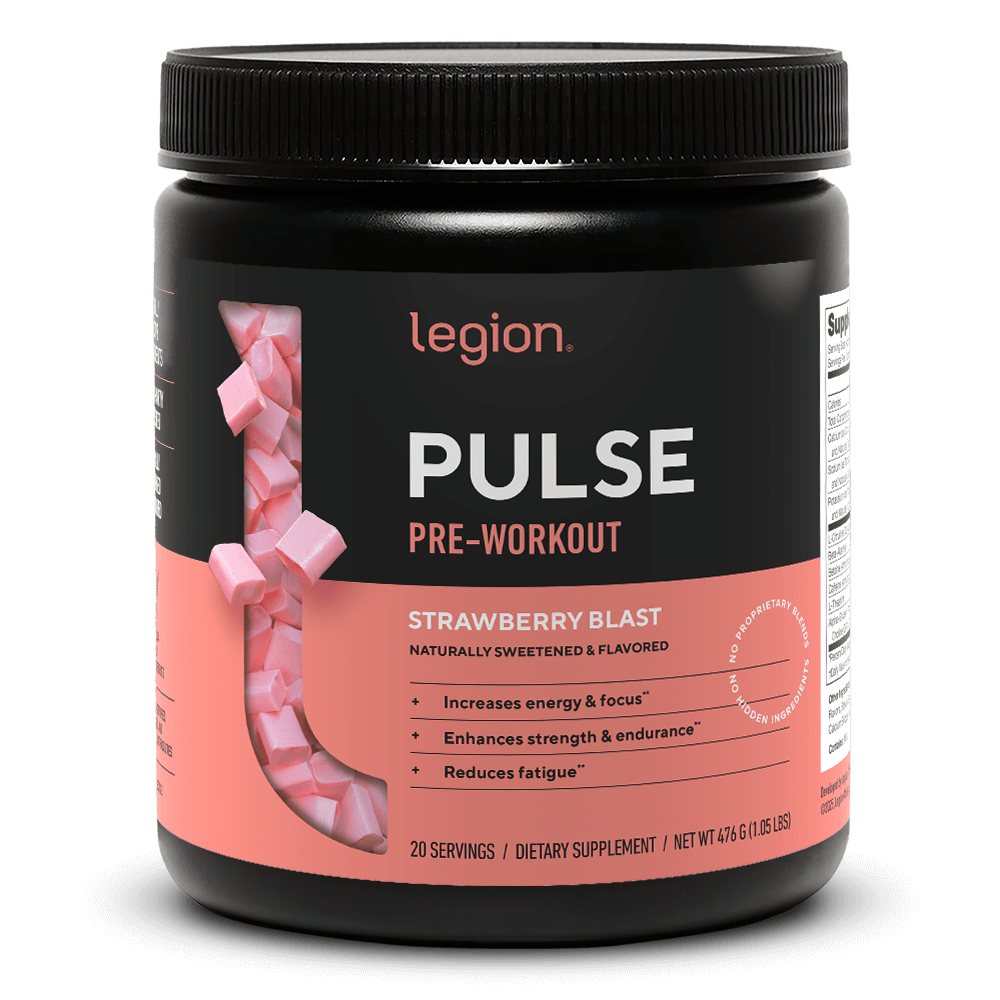
- 350 mg caffeine per serving — 4.4 mg/kg for an 80 kg lifter, inside the 3–6 mg/kg window this guide describes
- 350 mg L-theanine alongside it
- Every dose printed on the label, no proprietary blend
- 22,589 reviews
With a subscription $37.49 — $1.87 per dose
Caffeine has a half-life of five to six hours. A scoop at 6 pm still leaves roughly 175 mg in you at midnight.
Check price at Legion →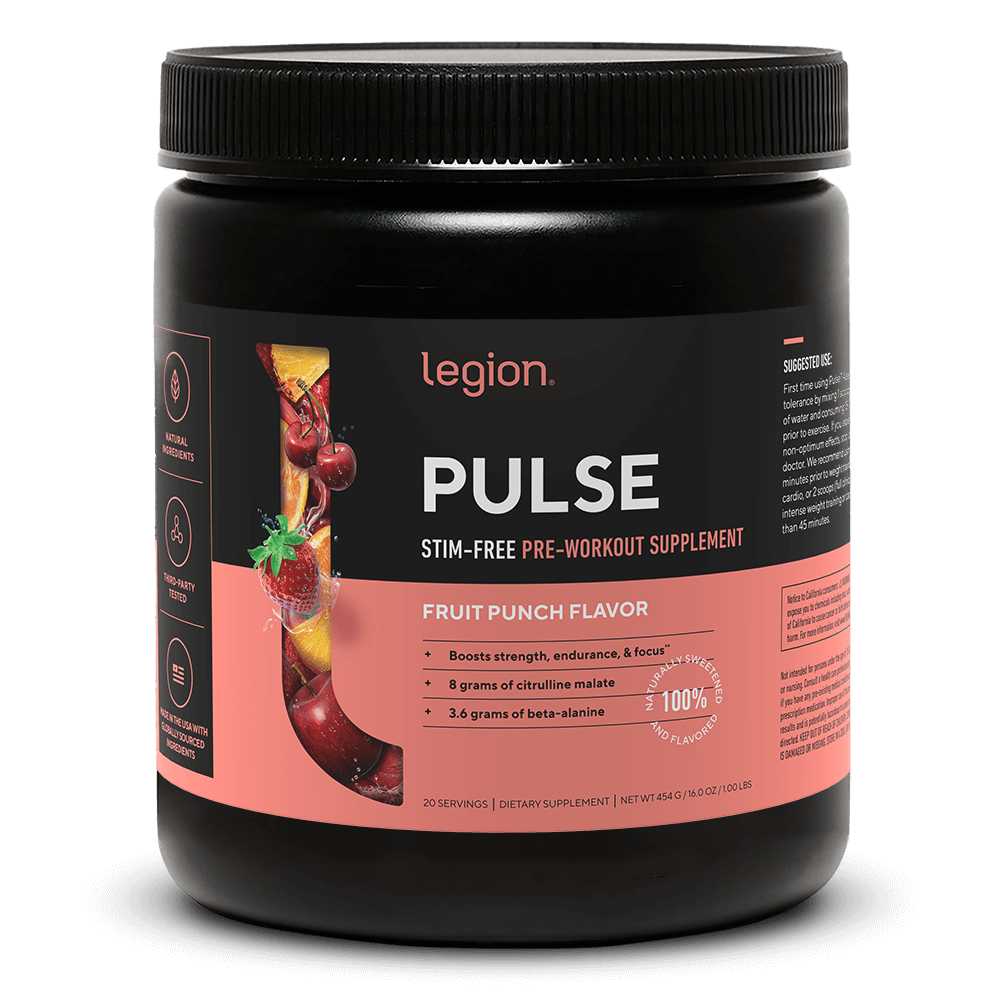
- Zero caffeine — for evening training, or once tolerance has flattened the effect
- Keeps the citrulline and beta-alanine, drops the stimulant
- Every dose printed on the label
With a subscription $37.49 — $1.87 per dose
If you already drink coffee before training, this is the version that does not stack a second 350 mg on top.
Check price at Legion →Next Steps
FAQ
What is the best caffeine dosage before training?
Most research supports 3-6 mg/kg taken around 60 minutes before exercise. Beginners should start lower, around 1.5-2 mg/kg, to assess tolerance.
When should I take caffeine before a workout?
A practical target is 45-60 minutes before training, though gum or mouth-rinse formats may act faster. Evening users should prioritize sleep and use the lowest effective dose.
Can I combine caffeine and creatine?
Yes. Caffeine and creatine can be used together. Creatine supports repeated high-intensity work over time, while caffeine is an acute stimulant used before training.
How much caffeine is too much?
For many healthy adults, total daily intake up to about 400 mg is commonly cited as a practical upper limit. Individual tolerance, body size, sleep quality and medical context matter.
Can I take caffeine every day?
Daily use is common, but habituation can reduce perceived effects. Some athletes reserve higher doses for key sessions or events.
Is coffee as effective as caffeine pills?
Coffee can be effective when the caffeine dose is known, but capsules are easier to dose precisely. Coffee also contains other compounds that may affect tolerance and preference.
What happens if I take caffeine before bed?
Late caffeine can reduce sleep duration and quality. Poor sleep can undermine recovery, training adaptation and next-day performance.
Is caffeine good for fat loss?
Caffeine can slightly increase energy expenditure and reduce perceived effort, but fat loss still depends mainly on sustained calorie balance and adherence.
Does caffeine dehydrate you?
Moderate caffeine intake does not appear to cause meaningful dehydration in habitual users, but athletes should still plan fluid and electrolyte intake around sweat losses.
Should beginners use caffeine before training?
Beginners can use caffeine, but it is optional. Start with a low dose, avoid late-day use, and focus first on training consistency, sleep, nutrition and hydration.