Our pick
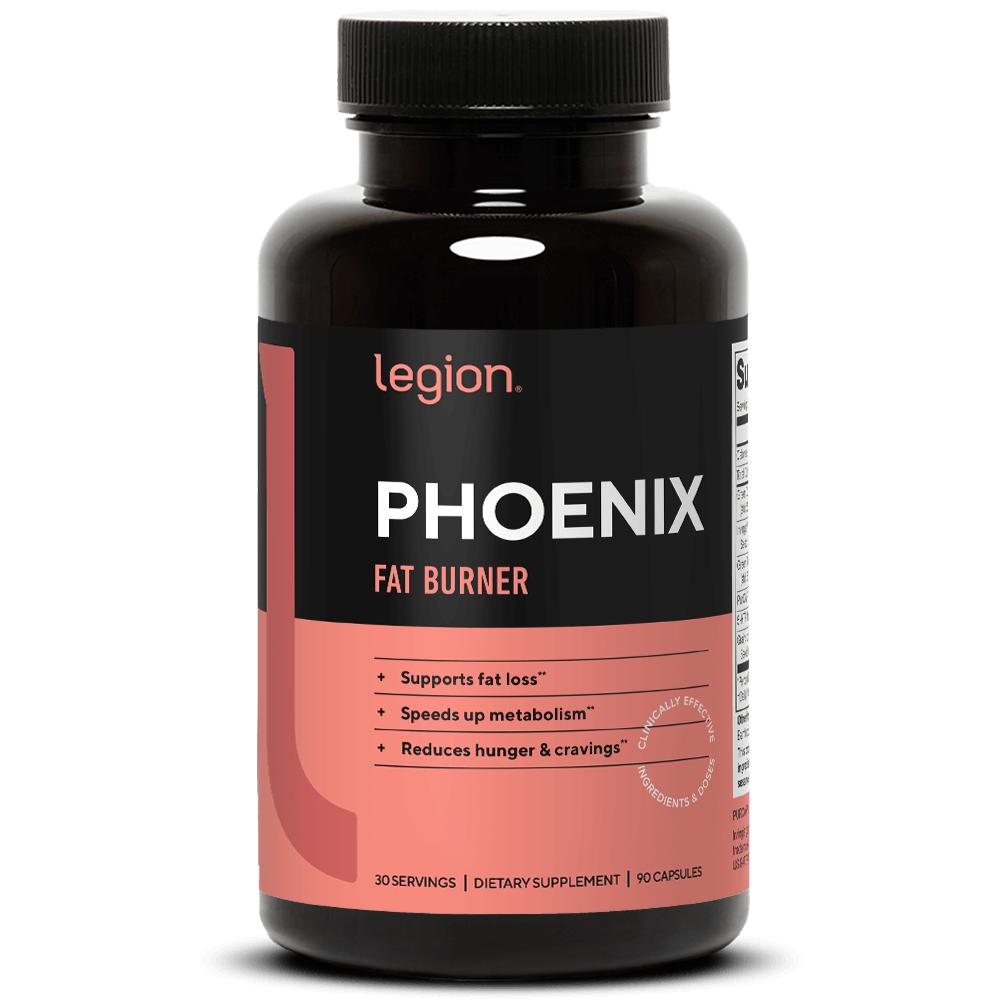
Legion Phoenix
Fat Burner
- Every dose disclosed
- Caffeinated version of Phoenix Stim-Free
Code nunopa — BOGO 50% off your first order
A deficit of 300–500 kcal per day is the range best supported for losing fat while holding on to muscle. Dieting on cardio alone, without resistance training, gives up roughly 25–30% of the weight lost as muscle rather than fat.
We no longer earn commission on any competing supplement brand on this page. The only supplement link we earn from is Legion, below — so you can weigh our ranking above knowing exactly where our money comes from.
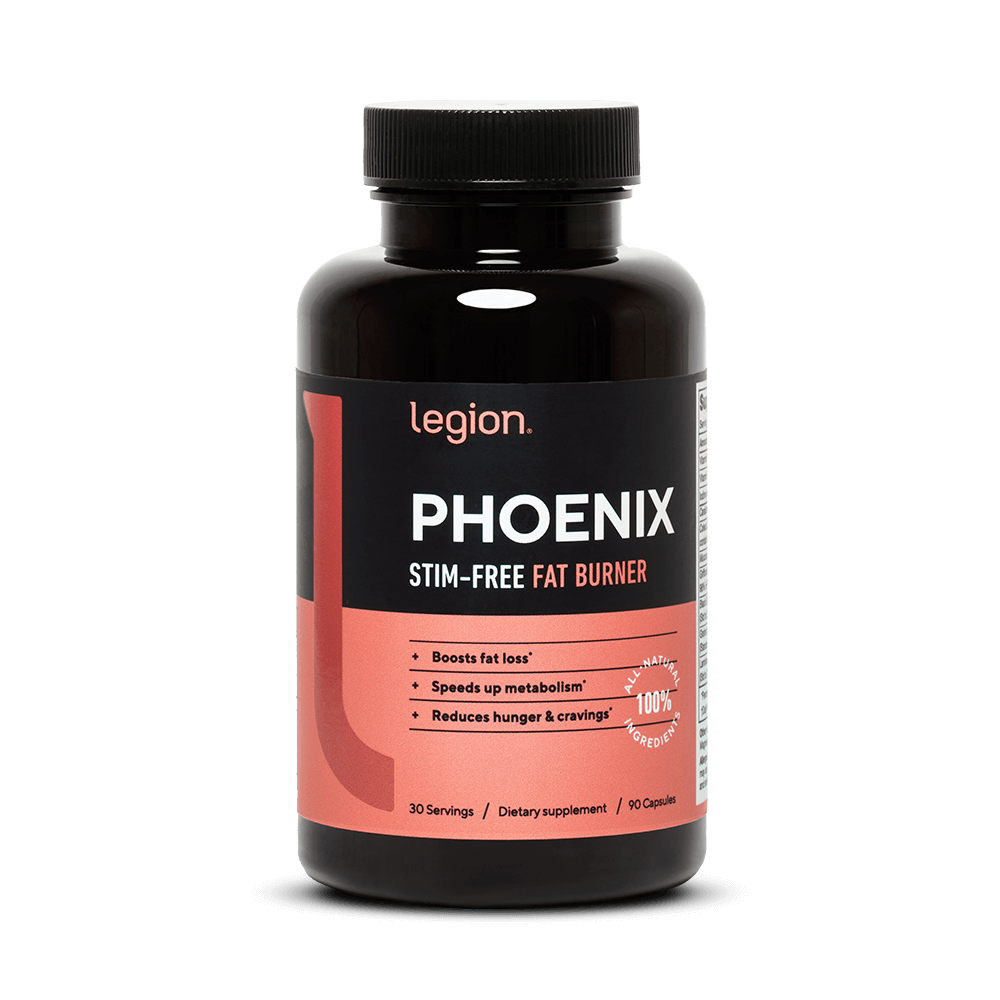
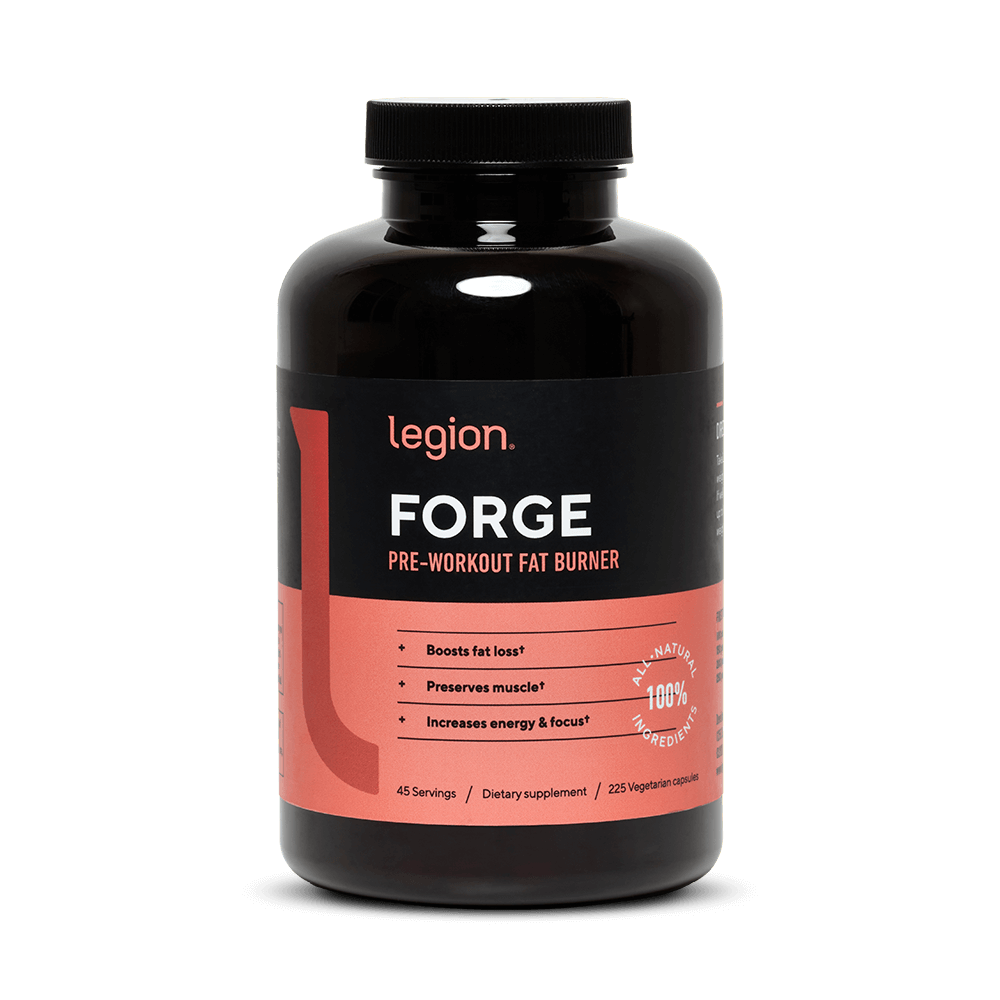
Disclosure: every product here is a Legion product and we earn a commission if you buy through these links, at no extra cost to you. The link is what credits us; the code is what gets you the discount, so use both. Our dosing guidance comes from published human trials and is not changed by the commission.
Evidence-based beginner and intermediate guide.
Explore ->Ranked recommendations and affiliate product options.
Explore ->Compare benefits, timing, dosage and alternatives.
Explore ->Practical answers to common questions.
Explore ->Fat loss ultimately requires sustained energy deficit — but the type of exercise, the protein intake, and the rate of loss all determine whether you lose fat or muscle. The evidence consistently shows that what you do alongside the caloric deficit matters as much as the deficit itself.
Donnelly et al. (2009) — ACSM position stand. ≥250 min/week of moderate-intensity activity produces clinically significant weight loss. 150–250 min/week prevents weight gain. <150 min/week is insufficient for weight loss without dietary restriction.
PubMed 19127177 →Willis et al. (2012) — RCT comparing aerobic, resistance, and combined training. Aerobic training was most efficient for fat mass reduction; resistance training preserved lean mass; combined training produced the best body composition outcomes but required significantly more time.
PubMed 23019316 →Trapp et al. (2008) — 15 weeks of HIIT vs steady-state in young women. HIIT group lost significantly more subcutaneous fat including trunk fat, despite shorter exercise duration. Time-efficient advantage of HIIT is real but not always superior for absolute fat loss when total work is equated.
PubMed 18197184 →Stiegler & Cunliffe (2006) — review on fat-free mass retention during weight loss. Resistance training + high protein (>1.8 g/kg/day) is the most effective strategy to preserve lean mass during caloric restriction. Cardio-only dieting without resistance training loses ~25–30% of weight from muscle.
PubMed 16526835 →A deficit of 300–500 kcal/day is supported as the "sweet spot" for fat loss while preserving lean mass in most individuals. Larger deficits (>750 kcal/day) accelerate scale weight loss but disproportionately increase muscle loss and hormonal disruption (reduced testosterone, thyroid, leptin). Slower loss rates (0.5–1% bodyweight/week) produce better body composition outcomes than rapid weight loss approaches.
Willis et al. (2012) showed aerobic training burns more calories per session and produces more fat mass reduction than resistance training alone. However, resistance training preserves lean mass, which maintains resting metabolic rate during a deficit. The evidence-based answer: combine both. Aerobic training for caloric expenditure; resistance training to prevent the lean mass loss that makes weight regain likely.
The evidence does not support fasted cardio as superior for fat loss over matched-intensity fed-state cardio when total daily caloric intake is controlled. Short-term studies show higher fat oxidation during fasted sessions, but 24-hour fat balance studies find no meaningful difference. If fasted cardio improves your adherence or performance, it is a valid strategy — but the mechanism is not "fat burning", it is total caloric deficit.
Stiegler & Cunliffe (2006) and subsequent research recommend ≥1.8–2.4 g/kg/day during caloric restriction to protect lean mass — higher than the protein target for maintenance or muscle building phases. The anabolic resistance caused by energy deficit means you need more protein, not less, to achieve the same muscle-preserving effect.
Metabolic adaptation — the body reduces total energy expenditure in response to caloric restriction through reduced NEAT (non-exercise activity thermogenesis), lower resting metabolic rate, and hormonal changes (leptin, ghrelin, thyroid). Diet breaks of 1–2 weeks at maintenance calories every 6–8 weeks have research support for partially resetting these adaptive responses and improving long-term fat loss outcomes.
The only ingredients with reproducible, meaningful evidence in humans are caffeine (3–6 mg/kg improves exercise performance and increases caloric expenditure by ~5–11%) and possibly green tea extract (modest thermogenic effect, ~80 kcal/day in some studies). All other "fat burning" compounds have insufficient or industry-funded evidence. No supplement overrides a sustained caloric surplus.
Supplements move fat loss at the margin. The numbers on this page are the honest ones for that category, and they are small.
The prescription options were measured on a different scale entirely. In STEP-1, 1,961 adults on semaglutide lost an average of 14.9% of body weight over 68 weeks. In SURMOUNT-5, tirzepatide averaged 21.5% against semaglutide's 14.5% over 72 weeks, head to head.
For someone at 90 kg that is roughly thirty pounds against three. It is also a different category with different risks, it is prescription-only, and the averages hide a wide spread — 13.6% of the STEP-1 group never reached 5% loss. All of which is worth reading before deciding anything.
What the GLP-1 trials actually found →