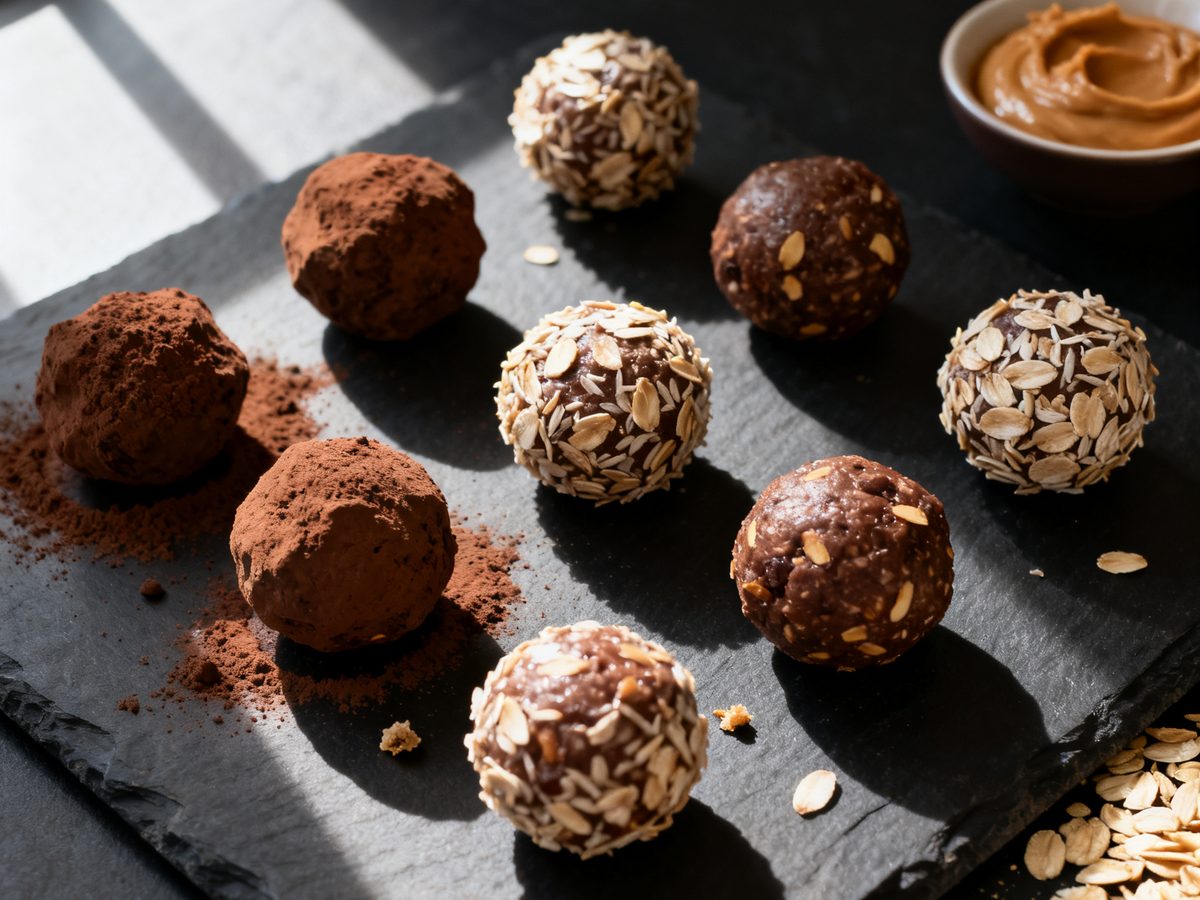
A protein ball made to the recipe almost everyone publishes carries 4.7 g of protein and 105 calories. To reach 20 g of protein you would eat 4.2 of them, which is about 443 calories. That is not a snack. That is a meal, and it is mostly peanut butter.
None of this makes them bad. It makes the name misleading. Below is the arithmetic on both versions, taken from standard food-composition figures, and one change that nearly doubles the protein per calorie without changing the method at all.
The recipe as it is usually written
| Ingredient | Amount | Protein | kcal |
|---|---|---|---|
| Rolled oats, dry | 120 g | 15.0 g | 450 |
| Peanut butter | 128 g | 32.0 g | 760 |
| Honey | 84 g | 0.3 g | 255 |
| Whey protein isolate | 30 g | 25.0 g | 110 |
| Chia seeds | 20 g | 3.3 g | 97 |
| Whole batch | 16 balls | 75.6 g | 1672 |
| Per ball | 1 | 4.7 g | 105 |
4.7 g of protein per ball, at 105 calories. That is 4.5 g of protein per 100 calories.
Method
- Stir the dry ingredients together first, so the protein powder does not clump when it meets the wet.
- Add the peanut butter and honey and work it with a spoon until there is no loose powder left.
- If it will not hold together, add liquid a teaspoon at a time. Protein powder absorbs more than you expect and the amount varies by brand.
- Roll into balls. Chill for thirty minutes so they firm up.
- They keep about a week in the fridge, or three months frozen.
Where the calories actually go
Peanut butter is 25 g of protein per 100 g and 594 calories. It earns its place on texture and taste, not on protein. In the recipe above it supplies most of the calories in the batch while whey supplies most of the protein from a quarter of the weight.
The same thing, rebalanced
| Ingredient | Amount | Protein | kcal |
|---|---|---|---|
| Rolled oats, dry | 120 g | 15.0 g | 450 |
| Peanut butter | 64 g | 16.0 g | 380 |
| Whey protein isolate | 90 g | 75.0 g | 330 |
| Honey | 30 g | 0.1 g | 91 |
| Cocoa powder, unsweetened | 15 g | 2.9 g | 34 |
| Skim milk | 80 ml | 2.6 g | 28 |
| Whole batch | 16 balls | 111.6 g | 1313 |
| Per ball | 1 | 7.0 g | 82 |
7.0 g of protein per ball, at 82 calories. That is 8.5 g of protein per 100 calories.
Method
- Stir the dry ingredients together first, so the protein powder does not clump when it meets the wet.
- Add the peanut butter and honey and work it with a spoon until there is no loose powder left.
- If it will not hold together, add liquid a teaspoon at a time. Protein powder absorbs more than you expect and the amount varies by brand.
- Roll into balls. Chill for thirty minutes so they firm up.
- They keep about a week in the fridge, or three months frozen.
The two, side by side
| Per ball | Usual recipe | Rebalanced |
|---|---|---|
| Protein | 4.7 g | 7.0 g |
| Calories | 105 | 82 |
| Protein per 100 kcal | 4.5 g | 8.5 g |
| Balls to reach 20 g protein | 4.2 | 2.9 |
88% more protein per calorie, from halving the peanut butter, tripling the whey and letting milk do the binding the fat used to do. Same bowl, same thirty minutes in the fridge.
For context, that 8.5 g per 100 calories is still mid-table. Greek yogurt at 0% fat runs about 17 and whey on its own runs about 23. A protein ball is a convenient snack that happens to contain protein, not a protein source you would build a day around.
The powder is doing the work
Both recipes stand or fall on the whey. Isolate at 83 g per 100 g is what moves the number; a cheap concentrate with a proprietary blend on the label will not do the same arithmetic. We compared the ones people actually buy against their own panels.
The protein chart, free
30+ foods ranked by protein per 100 calories, the same column these macros were calculated from. Printable, no recipes to scroll past. The full 64-food table is in The Protein Reference Guide.
Questions people actually ask
Can I make them without protein powder?
Yes, and they will taste the same. They will also carry roughly 3.2 g of protein per 100 calories, which is an oat and peanut butter ball. That is a fine thing to eat. It is not a protein snack.
Why cocoa powder instead of chocolate chips?
Because chip composition varies by brand and cocoa percentage, so any single figure on this page would have been a guess. Cocoa powder is 19.6 g of protein per 100 g and its numbers are known.
How long do they keep?
About a week in the fridge, three months frozen. Roll them and freeze on a tray before bagging, or they weld together.
Macros calculated from standard food-composition values, the same table used in The Protein Reference Guide. Protein powder figures vary by brand: check your own tub's panel and the arithmetic will shift a little.