Table of Contents
No published study has directly shown creatine causes hair loss in humans. One RCT from 2009 showed a rise in DHT (a hormone linked to male pattern baldness) after creatine loading in rugby players. It did not measure hair loss. No follow-up study has replicated this finding. The vast majority of creatine research — including long-term trials — shows no androgenic or dermatological side effects. If you are genetically predisposed to male pattern baldness (MPHL), the DHT increase is theoretically relevant but unproven. For most people, there is no meaningful risk.
The One Study Behind the Claim
3-week creatine loading increases DHT in rugby players
21 male rugby players were randomized to creatine (25g/day × 7 days loading, then 5g/day × 14 days) or placebo. The creatine group showed a significant increase in serum DHT (+56% after loading, returning to +40% at maintenance) and a rise in the DHT:testosterone ratio. Testosterone itself did not change significantly. Hair loss was not measured. No participants reported hair loss.
This is the entire scientific basis for the creatine-hair-loss claim. A single study, 21 subjects, no hair loss outcomes measured. It was published in a legitimate journal (Clinical Journal of Sport Medicine) but has never been replicated.
The DHT finding is biologically plausible — creatine may increase conversion of testosterone to DHT via 5-alpha reductase enzyme activity — but "biologically plausible" and "proven to cause hair loss" are two very different things.
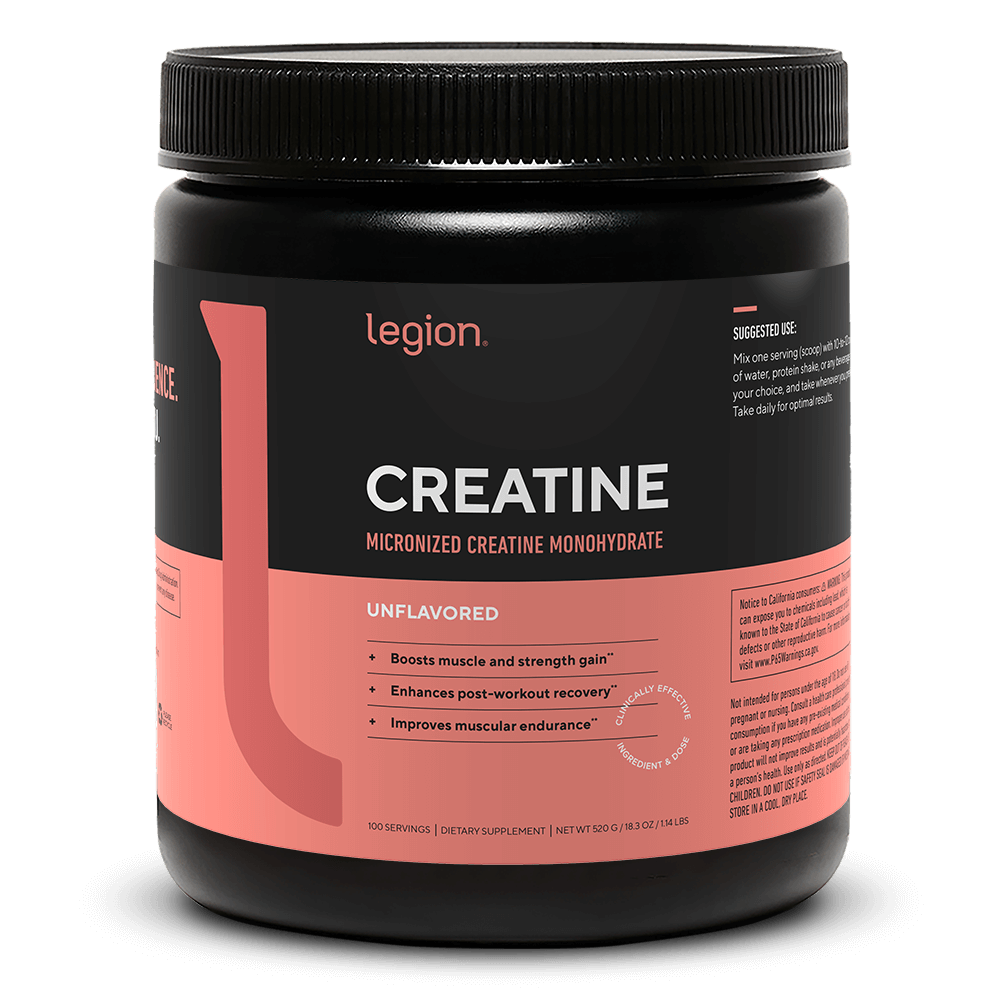
Disclosure: we earn a commission if you buy through this link, at no extra cost to you. It does not change what this page says.
DHT and Hair Loss — How It Works
DHT (dihydrotestosterone) is a potent androgen derived from testosterone via 5-alpha reductase. In people with androgenetic alopecia (male or female pattern hair loss), hair follicles are genetically sensitive to DHT. Chronic DHT exposure causes follicle miniaturization — hairs become progressively finer until they stop growing.
Key caveats: DHT causes hair loss only in genetically susceptible individuals. Many men with high DHT don't lose hair; many men with normal DHT do. The genetic factor (sensitivity of follicle androgen receptors) is the primary determinant, not DHT level alone.
Finasteride (a 5-alpha reductase inhibitor) reduces DHT by ~70% and effectively slows hair loss — confirming DHT's role. But even in the Van der Merwe study, the DHT increase from creatine was 40–56%, far less than the suppression needed to halt established MPHL.
What 500+ Creatine Studies Show
Over 500 published studies cover creatine supplementation across dozens of health outcomes. Long-term trials (up to 5 years) have assessed safety on renal, hepatic, cardiovascular, and hormonal markers. None have found androgenic side effects or documented hair loss as an adverse event.
A 2021 systematic review and safety meta-analysis (Antonio et al.) covering over 300 studies concluded creatine monohydrate is one of the most extensively studied and safest supplements available, with no documented long-term adverse effects. Hair loss is not mentioned as a concern in any major creatine safety review.
The Van der Merwe DHT finding has never been replicated. Several studies measuring testosterone and androgen panels in creatine users have found no significant hormone changes. The DHT finding may be a false positive, a protocol-specific effect, or simply not generalizable beyond that specific population and context.
Who Might Be at Risk?
If you are already losing hair due to androgenetic alopecia, a theoretical increase in DHT is more relevant — not because creatine has been proven to accelerate it, but because your follicles are already DHT-sensitive. This is a precautionary concern, not an evidence-based warning.
If you are young (18–25) with a strong family history of early-onset male pattern baldness and you notice accelerated shedding after starting creatine, it is reasonable to stop and see if the pattern changes. This is basic self-experimentation — not evidence that creatine caused it.
For the majority of people — those without strong genetic predisposition or existing androgenetic alopecia — the creatine-hair-loss risk is not meaningful based on current evidence.
Our Recommendations
Take creatine at the standard maintenance dose (3–5g/day) without a loading phase if you are concerned about the DHT spike. The Van der Merwe study used 25g/day loading — a much higher acute dose than maintenance. Whether the DHT rise is dose-dependent is unknown, but avoiding loading reduces your exposure to any peak DHT effect.
If you are on finasteride for MPHL, creatine is not contraindicated — finasteride's DHT suppression (~70%) would more than offset any creatine-related increase.
Monitor your hairline if you start creatine and have family history of early MPH. If you notice accelerated shedding in the first 4–8 weeks, take a break and observe. This is self-monitoring, not evidence of causation.
Top Creatine Products
FAQs
Has any study actually measured hair loss in creatine users?
No. The only relevant study (Van der Merwe, 2009) measured DHT levels, not hair loss. It found elevated DHT but did not follow participants for hair outcomes. No study has measured hair count, follicle density, or baldness progression as a creatine outcome.
Will stopping creatine reverse hair loss?
If hair loss is primarily genetic (androgenetic alopecia), stopping creatine is unlikely to reverse it — the loss is driven by follicle DHT sensitivity, which persists regardless of DHT level fluctuations from supplements. If you believe creatine accelerated a pre-existing process, stopping may slow the rate but won't regrow miniaturized follicles.
Does creatine increase testosterone?
No. Multiple studies measuring testosterone in creatine users find no significant change. The Van der Merwe study found DHT increased but total testosterone did not. Some studies show a marginal increase in free testosterone (<10%) but effects are inconsistent and likely not clinically meaningful.
Is creatine HCL safer for hair than monohydrate?
There is no evidence that creatine HCL has a different hormonal profile than monohydrate. The Van der Merwe study used monohydrate at loading doses. No study has compared hair outcomes or DHT levels between creatine forms. There is no scientific basis for choosing HCL over monohydrate specifically for hair safety.
Should I avoid creatine if I'm already taking finasteride?
No — there's no known interaction. Finasteride suppresses DHT by ~70% via 5-alpha reductase inhibition. Even if creatine raises DHT, the net DHT level on finasteride + creatine would still be significantly lower than without finasteride. Discuss with your prescribing physician if concerned.