What You'll Learn
Table of Contents
Glass Or Plastic
The honest version, because both have a real case.
Glass does not stain, does not hold smells, goes from fridge to oven, and does not degrade. It is also heavy, breakable, and a stack of ten takes real cupboard space. If you carry lunch on a bike, that is a genuine problem rather than a quibble.
Plastic is light, cheap and stacks small. It stains with tomato, holds curry smells, warps in the dishwasher over time, and cannot go in an oven.
For food prepped on Sunday and reheated during the week, glass wins on the one thing that decides whether the food gets eaten — it is the only option that lets you reheat in an oven or air fryer rather than a microwave.
Bottom line: Choosing once and want to stop thinking about it? Buy glass. Carry meals on foot or by bike? Buy plastic and accept the staining.
Our Picks
The default: a matched set of glass, one size.
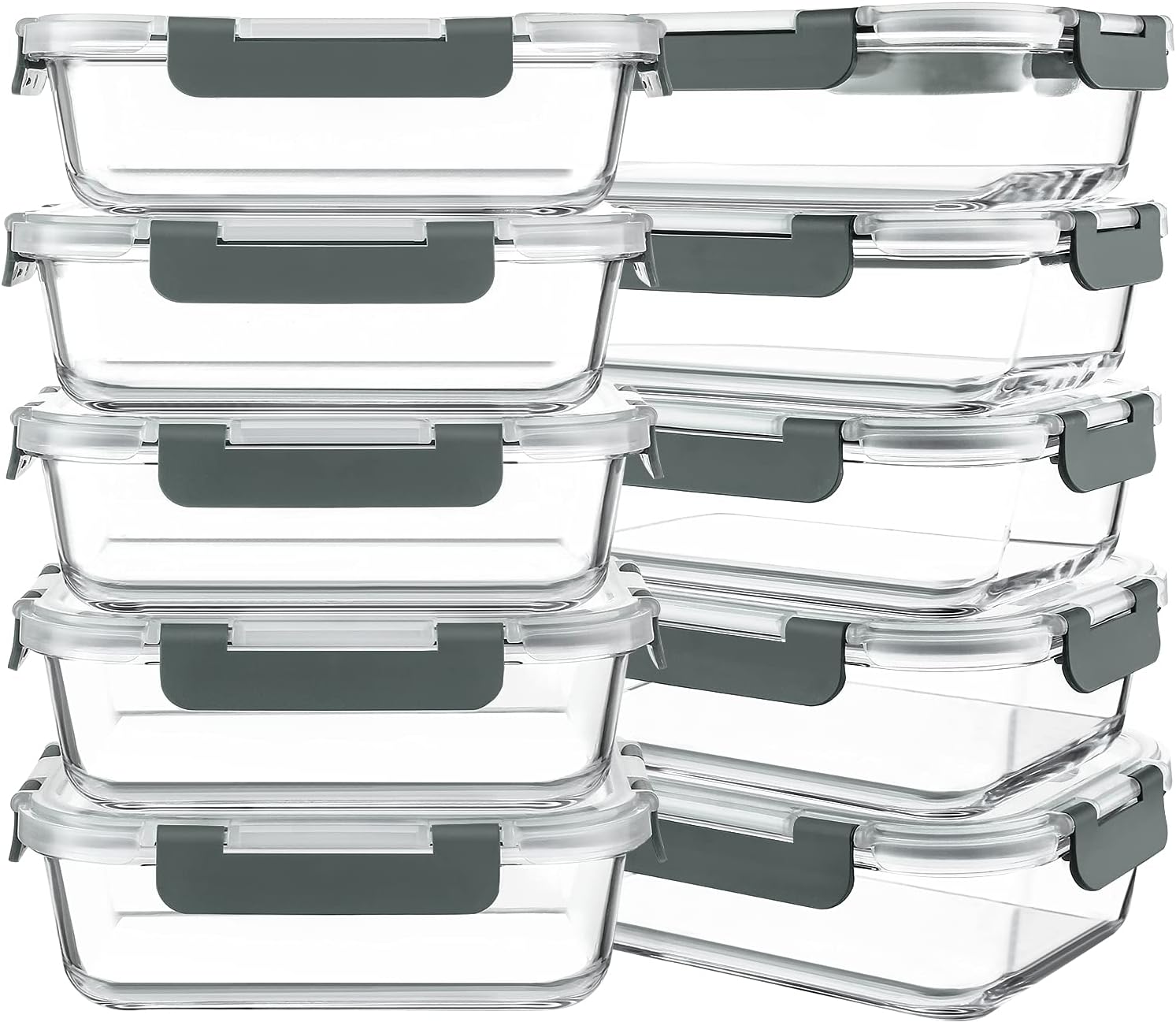
Glass Meal Prep Containers, 30 oz, 10-pack
Ten identical 30 oz glass containers with locking airtight lids. One size means they stack; glass means you can reheat in an oven or air fryer rather than a microwave. Confirm the current price on Amazon.
Check price on Amazon →Only if you buy protein in bulk and freeze it.

Potane Precision Vacuum Sealer
Vacuum sealer with a built-in cutter and roll storage, so bags are cut to the size of the portion rather than the other way round. Worth it for bulk buying and freezing; not for a normal week of prep.
Check price on Amazon →The Seal Is The Whole Product
Every container holds food. The difference between one you use for years and one that ends up at the back of a cupboard is whether it leaks.
What to look for, in order:
- Locking clips on all four sides, not two. Two-clip lids flex in the middle and leak from the unclipped edges.
- A removable silicone gasket. Fixed gaskets trap food and hold smells within months. Removable ones can be washed and replaced.
- A vent that actually opens, if it has one. Microwaving a fully sealed container builds pressure; a vent solves it. Without one you have to unclip the lid, which defeats the point.
Test it the day it arrives: half fill with water, seal it, turn it upside down over the sink for thirty seconds. If it drips, return it before you have filled it with chicken.
Portion Size: Smaller Than You Think
The standard advice is to buy large containers so they hold anything. That is wrong for two situations, and one of them may be yours.
If you are eating less than you used to — through appetite suppression, deliberate restriction, or simply age — a large container encourages a portion you will not finish, and food you do not finish gets thrown away. That is money and protein lost at the same time.
Around 30 oz is the useful size for a single protein-first meal: a chicken breast, a vegetable and a small starch. Our protein density guide covers why the composition matters more than the volume.
Buy one size, not three. Same-size containers stack, and stacking is what decides whether the fridge stays usable by Wednesday.
Reheating Is Where Meal Prep Actually Dies
This is the step nobody plans for, and it ends more meal prep attempts than any other.
Batch-cooked chicken reheated in a microwave is dry. Dry chicken does not get eaten. The macros of a meal you scraped into the bin are irrelevant.
An oven or air fryer reheats protein by browning the surface rather than heating the water inside, which restores something close to the original texture. That is only possible if the container is oven-safe — which is the practical argument for glass, and why the trade-off above resolves the way it does.
Full method in our air fryer cooking guide.
Bottom line: Cook the protein and the vegetables separately, and store them separately. Reheated together, the vegetables go soft and the protein goes dry. One extra lid saves the meal.
Does A Vacuum Sealer Earn Its Place?
Honest answer: for most people cooking for one or two, no.
A sealer costs roughly what a full set of glass containers costs, and food prepped for the coming week does not need it — a good lid and a fridge handle five days without difficulty.
Where it does earn its place:
- Buying protein in bulk and freezing it. This is the real case. Vacuum-sealed chicken keeps far longer in a freezer without freezer burn, and bulk buying is where the money is actually saved.
- Cooking a month at a time rather than a week.
- Sous vide, if you do it.
If your protein arrives from the supermarket in weekly amounts, skip it and spend the money on containers. If you buy a case of chicken breast when it is on offer, it pays for itself within a few months.
Important: Vacuum sealing is not a substitute for refrigeration and does not make food safe indefinitely. Removing oxygen slows some spoilage organisms and not others, and some of the ones that matter grow without it. Follow the manufacturer's storage times and keep sealed food refrigerated or frozen.
What You Can Ignore
- Compartment trays. They lock you into one meal shape and the dividers rarely stop liquid crossing between sections.
- Mixed-size sets. Marketed as versatile; in practice they do not stack and you use two of the six sizes.
- “BPA-free” printed on glass. Glass does not contain BPA. It is on the box because printing it is free.
- Vacuum sealing this week's food. A lid and a fridge handle five days.