What You'll Learn
Table of Contents
The Real Constraint Is Friction
Almost nobody misses a protein target because they do not know what protein is. They miss it because at half past six, cooking is one more thing.
Every piece of equipment on this page earns its place by removing a specific friction: the meal that takes too long, the leftovers that reheat badly, the portion that has to be guessed, the day when nothing solid is going down.
Which means the buying order is not about capability. It is about which friction is stopping you.
Tier 1: The Three That Matter
If you buy nothing else, buy these. In this order.
1. An air fryer. The single highest-return appliance for protein-first cooking. Chicken breast in eighteen minutes, browned rather than steamed, in a machine sized for one or two portions that preheats in two minutes instead of fifteen. It also reheats batch-cooked protein without drying it, which is the step where most meal prep dies. Basket or oven — the full comparison.
2. Storage that seals and goes in an oven. Cooking in batches only works if the food survives to Wednesday and reheats into something you want to eat. Glass versus plastic, and the seal that decides everything.
3. A kitchen scale. The cheapest item here and the one that makes the protein target real rather than approximate. Guessing portions is the single largest source of error in protein tracking, and it errs downward — people consistently overestimate what they ate.
Bottom line: Air fryer, containers, scale. Under $200 for all three, and it covers cooking, storage and measurement — the three frictions that actually stop people.
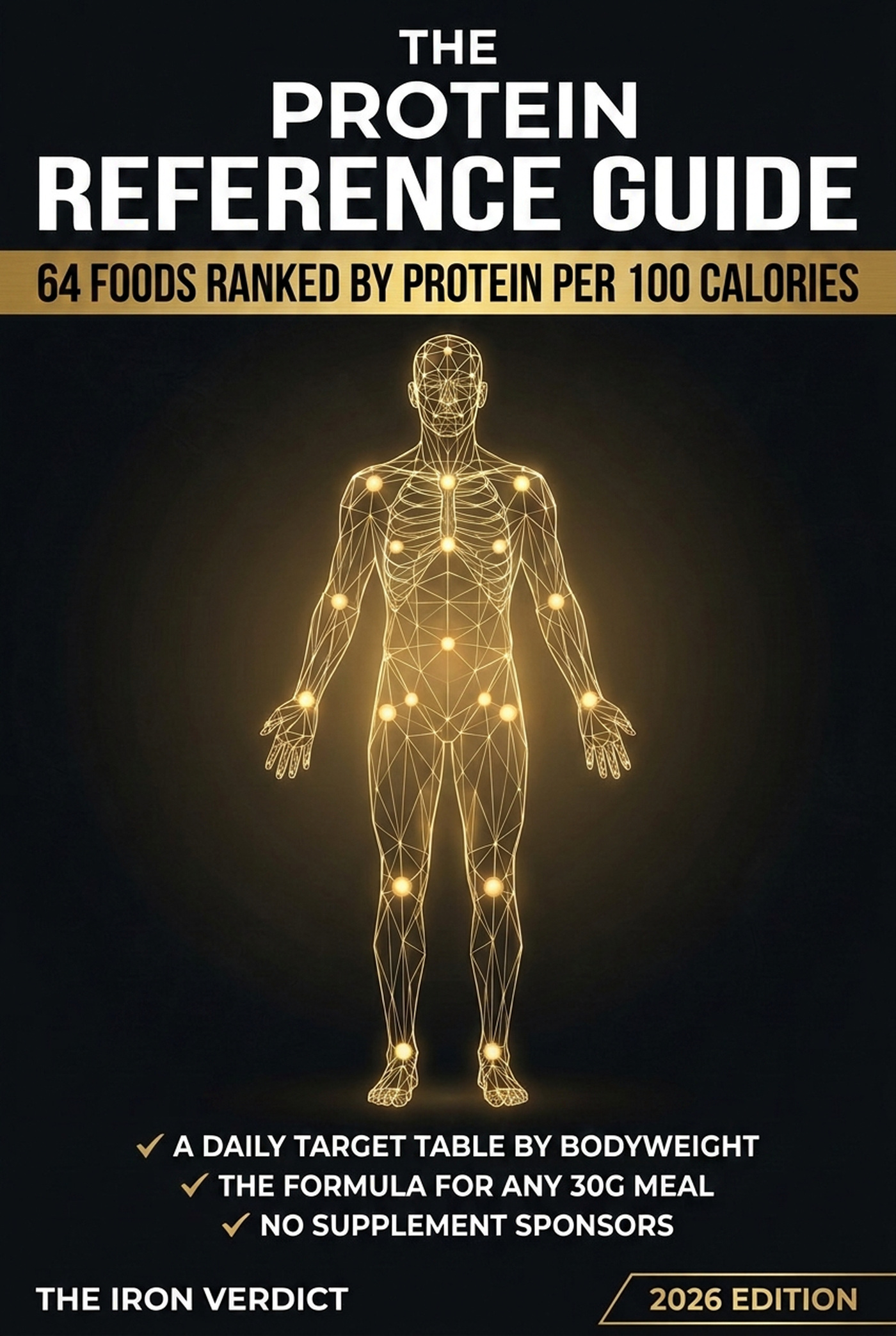
The Protein Reference Guide
The free chart tells you which foods are efficient. This tells you your number — a daily target keyed to your bodyweight rather than a vague goal range — and then the formula for assembling any 30 g meal to hit it. 64 foods, built to keep beside the scale.
Get it on Kindle →Tier 2: Once Tier 1 Is A Habit
Do not buy these first. They solve real problems, but only problems you meet after the basics are running.
A personal blender, if you use frozen fruit or whole-food ingredients, or need a shake thick enough to feel like a meal. The narrow case where it earns its place — and for powder and milk, a shaker bottle is genuinely enough.
A body composition scale or a waist tape, once you are consistent enough that there is a trend worth watching. What each is actually good for, including the honest limits of home body-fat readings.
A pressure cooker, if you want cheaper cuts of protein made tender or cook legumes regularly. Pressure cookers and cooking robots compared.
Tier 3: Specific Situations Only
Each of these is right for someone and wrong for most people. Buy on the situation, not on the review.
- A vacuum sealer — only if you buy protein in bulk and freeze it. For a normal week, a lid and a fridge are enough.
- A large air fryer oven — only if you batch-cook for a household. For one or two people, a basket does it better and faster.
- A cooking robot — only if active attention rather than time is your barrier, and you are comfortable being early in a category.
What To Skip Entirely
Four categories that get bought, used twice and put in a cupboard.
Compartment meal-prep trays. They lock you into one meal shape and the dividers rarely stop liquid crossing between sections.
Mixed-size container sets. Sold as versatile; they do not stack, and you use two of the six sizes.
High-power pitcher blenders, for shakes. Three times the price and worse at the specific job than a narrow single-serve jar.
Anything sold on a function count. “16-in-1” mostly describes preset time and temperature combinations rather than different hardware. A machine with a dial and a good temperature range does the same jobs.
The Order, In One Place
- Air fryer — cooking and reheating
- Glass containers, one size — storage
- Kitchen scale — measurement
- Then, once those are habit: blender, body composition scale, pressure cooker
- Then, if your situation calls for it: vacuum sealer, oven-style air fryer, cooking robot
And the free part: our 25 high-protein air fryer recipes come with the macros already worked out, which removes the last friction — knowing what to cook in the thing you just bought.